How to Spot Fake Shilajit Resin: A Quick Quality-Testing Guide
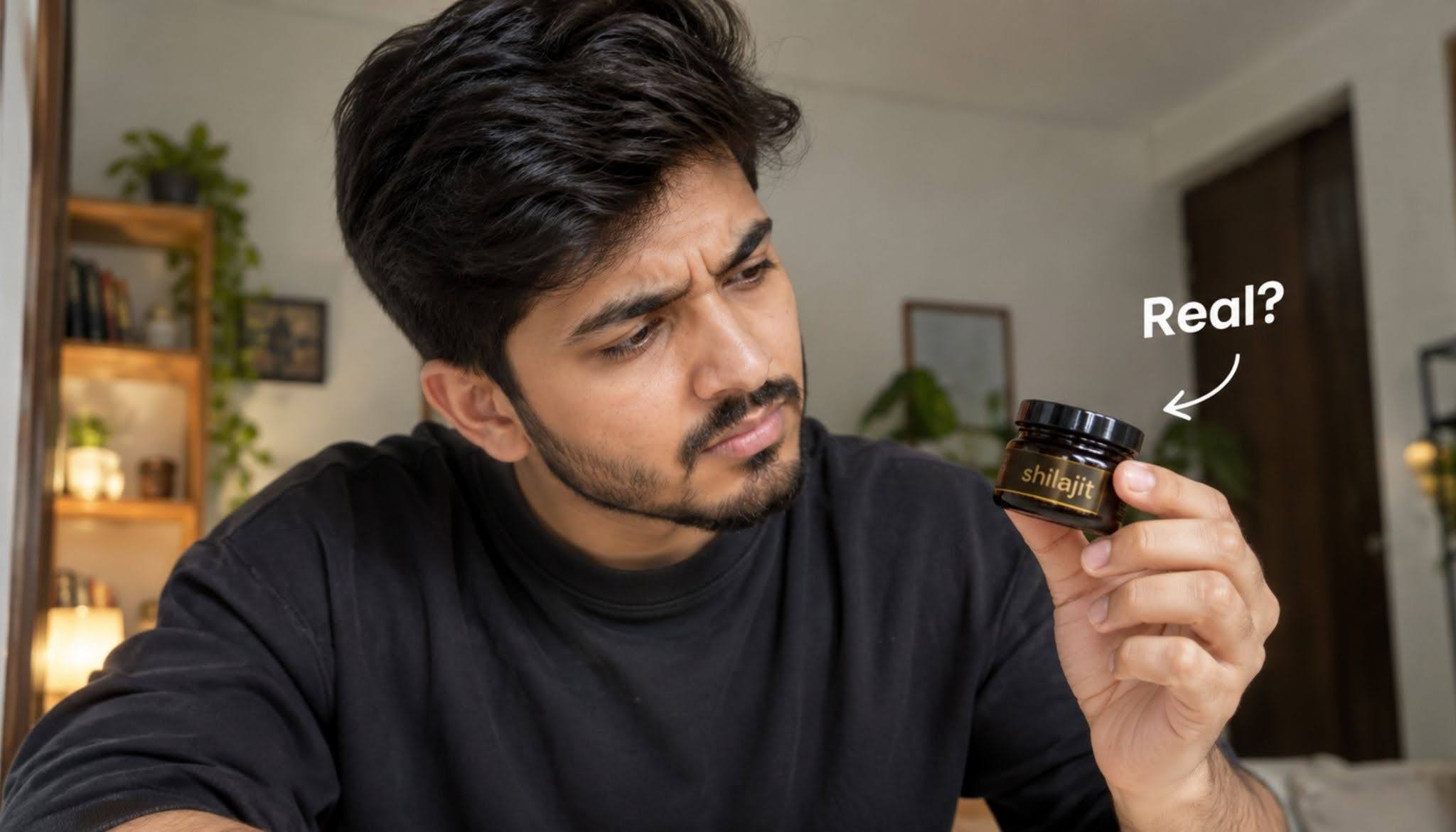
The Indian shilajit market is growing fast, and so is the number of counterfeit products. Synthetic fillers, coal tar, processed plant matter, and low-grade mineral extracts are regularly sold as "pure shilajit resin" at prices that look like a deal but deliver nothing. If you are comparing options and want to know how to know Shilajit is pure before spending your money, a few simple checks can separate the real thing from a convincing fake.
Why Fake Shilajit Is Common in the Indian Market
Genuine shilajit is rare, slow to harvest, and expensive to purify properly. The demand-supply gap creates an obvious incentive for adulteration. Common substitutes include processed fulvic acid powder mixed with binding agents, coal-based extracts, and heated sugar syrups dyed to look like resin.
Most fakes look convincing in a jar. Without a basic quality check, you have no way to tell real Shilajit vs fake from packaging alone.
4 At-Home Tests for Purity
You do not need a lab to run a first-pass quality check. These four tests can be done at home with what you already have.
1. Water Solubility Test
Drop a small amount of resin into a glass of warm water and stir gently. Real Shilajit resin dissolves completely within 2 to 3 minutes, turning the water a deep reddish-brown or golden colour. No residue should settle at the bottom.
Fake: Leaves undissolved chunks, powdery residue, or turns the water an unnaturally dark, opaque black.
2. Flame Test
Take a small piece of resin and hold it near a flame (a match or lighter works). Genuine shilajit does not catch fire or burn with a flame. It will bubble, swell, and produce an ash-like residue without igniting.
Fake: Synthetic fillers and coal-based substitutes will catch fire, melt like plastic, or produce a chemical smell.
3. Texture and Consistency Test
At room temperature, real shilajit resin is sticky and pliable, like thick tar. When refrigerated, it becomes hard and brittle, snapping cleanly when you try to break it. When warmed in your hand, it softens again.
Fake: Stays the same consistency regardless of temperature, or feels grainy and powdery rather than smooth and sticky.
4. Smell Test
Genuine shilajit has a distinct earthy, mineral-rich smell. Some describe it as smoky or slightly bitter. The smell is natural and not overpowering.
Fake: Chemical, metallic, or artificially sweet smells indicate adulteration or synthetic ingredients.
What Lab Testing and Certification Should Look Like
At-home tests are a useful first filter, but they cannot measure fulvic acid percentage, heavy metal levels, or microbial safety. That is where Shilajit testing lab certification matters.
What to Look For
- Fulvic acid content: A specific percentage (50%+ minimum), not vague "contains fulvic acid" claims
- Heavy metals panel: Lead, mercury, arsenic, and cadmium within safe limits
- Microbial testing: Free from harmful bacteria and fungi
- Third-party certification: NABL-certified reports, not just in-house testing
Reports should be batch-specific. Brands that include them in every pack, not just on a website, are signalling higher accountability.
Authentic Shilajit Brands: What to Check Before Buying
When evaluating authentic Shilajit brands, run through this checklist:
- Does the brand state a specific fulvic acid percentage on the label?
- Are lab reports NABL-certified and available per batch?
- Is the product manufactured in GMP-certified facilities?
- Does the brand explain its purification process (Shodhana, Triphala infusion, etc.)?
- Is the pricing consistent with genuine shilajit (roughly ₹40 to ₹60 per gram for quality resin)?
- Can you verify the product through the at-home tests above?
For a broader comparison of how top shilajit brands stack up, Kapiva's guide on the best shilajit resin in India covers the landscape in more detail. And for a deeper look at how raw shilajit goes from rock to jar, the article on how shilajit is sourced and purified walks through the traditional process.
How Kapiva's Shilajit Is Tested
Kapiva's Himalayan Shilajit Resin is built around the transparency checklist above.
- 60%+ fulvic acid with essential minerals, stated on the label
- NABL-certified lab reports included in every pack
- 20+ lab tests per batch covering heavy metals, microbial load, and active compound levels
- Purified using the traditional Shodhana method and infused with Triphala solution for better absorption
- Manufactured in GMP-certified facilities and formulated by Ayurvedic experts
- Rated 4.6/5 by over 5,300 users
How to use: Scoop 1/4th resin (250mg) with the spoon provided, mix in lukewarm water or milk, and consume once daily after a meal. Never on an empty stomach.
Frequently Asked Questions
Run four tests: dissolve in warm water (should dissolve fully), hold near a flame (should not ignite), check temperature response (hard when cold, sticky when warm), and smell (earthy, not chemical).
At least 50%, verified by a third-party lab. Higher percentages (60%+) indicate stronger potency.
NABL-certified, batch-specific reports covering fulvic acid content, heavy metals, and microbial testing. In-house reports without third-party verification are less reliable.
Extremely low-priced shilajit often uses synthetic fulvic acid or coal-based fillers. Genuine shilajit requires careful harvesting and extensive purification, which has a real cost.
Resin is generally the purest form with the least post-purification processing. Powder and capsules are harder to verify visually for purity.
Yes. Unpurified or synthetic shilajit can contain dangerous levels of heavy metals and microbial contaminants. Always buy from brands that publish third-party lab reports.